Featured

Does a Tourist Experience What Japanese People Eat?

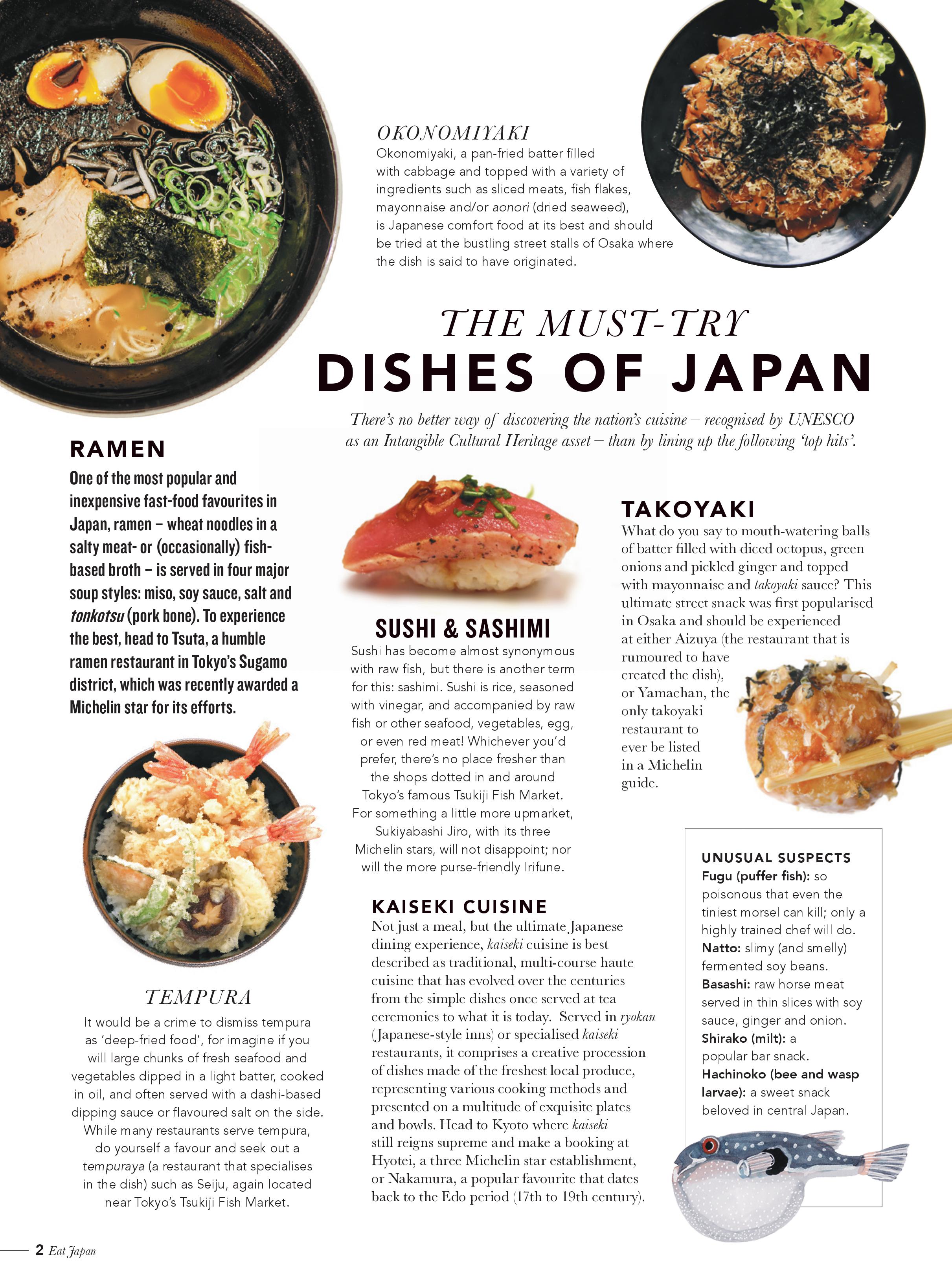
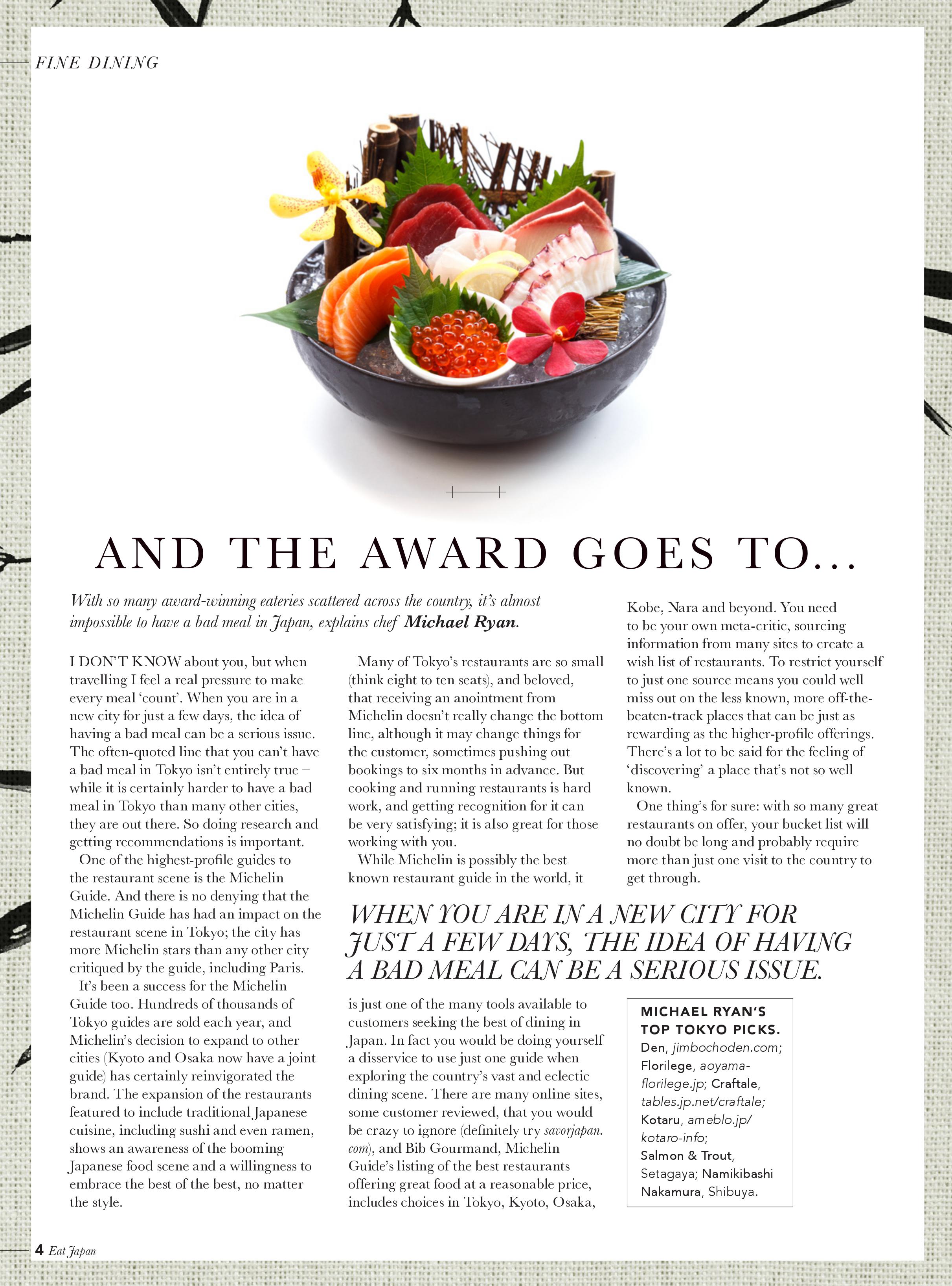
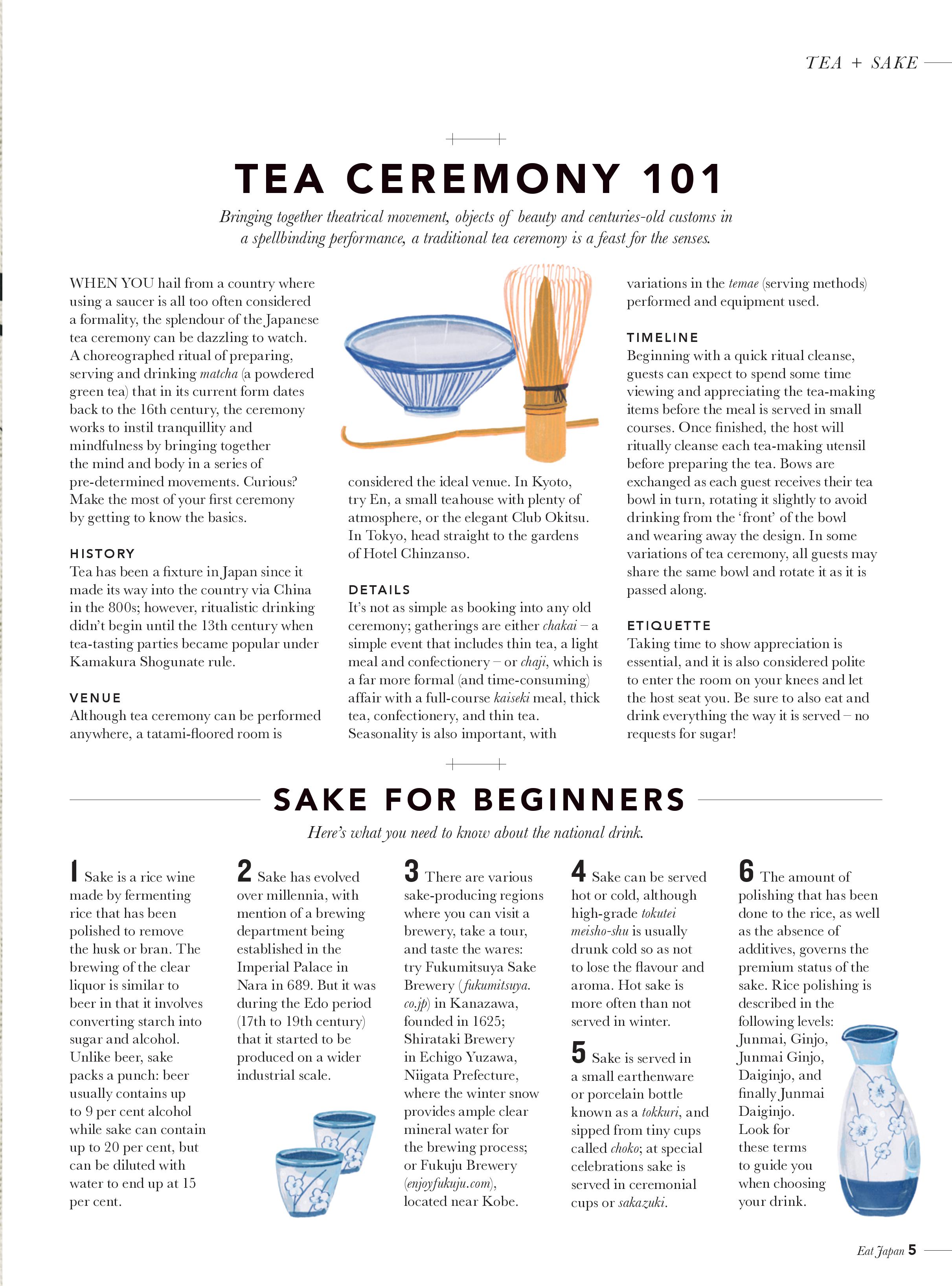
When someone mentions to you “I am going to visit Japan”, what do you think of? Japan has created an image of what ‘Japanese food’ is and it shapes our perspectives. Below is a portion of the culinary guidebook issued by the ‘Japanese National Tourism Organization’:
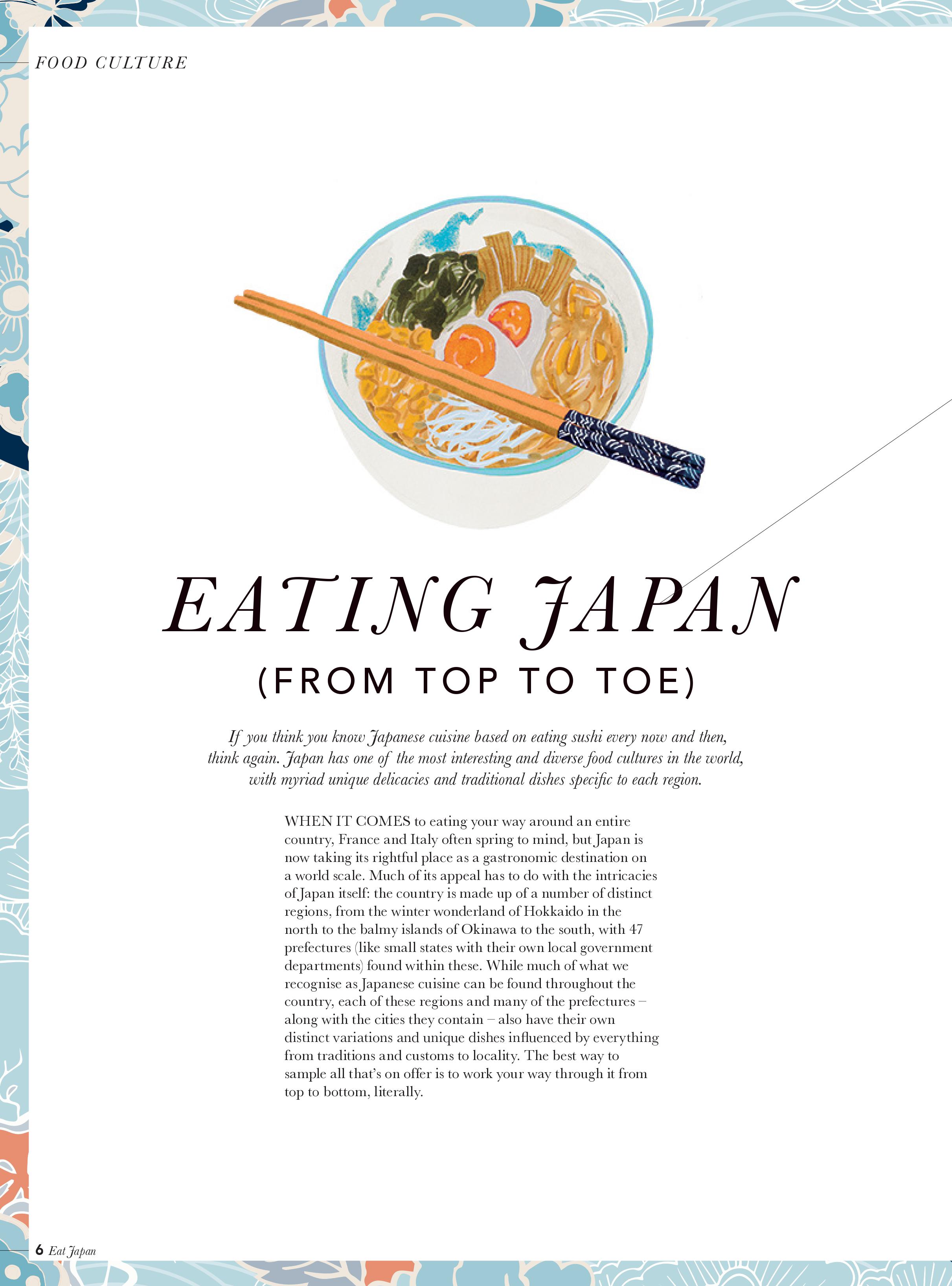
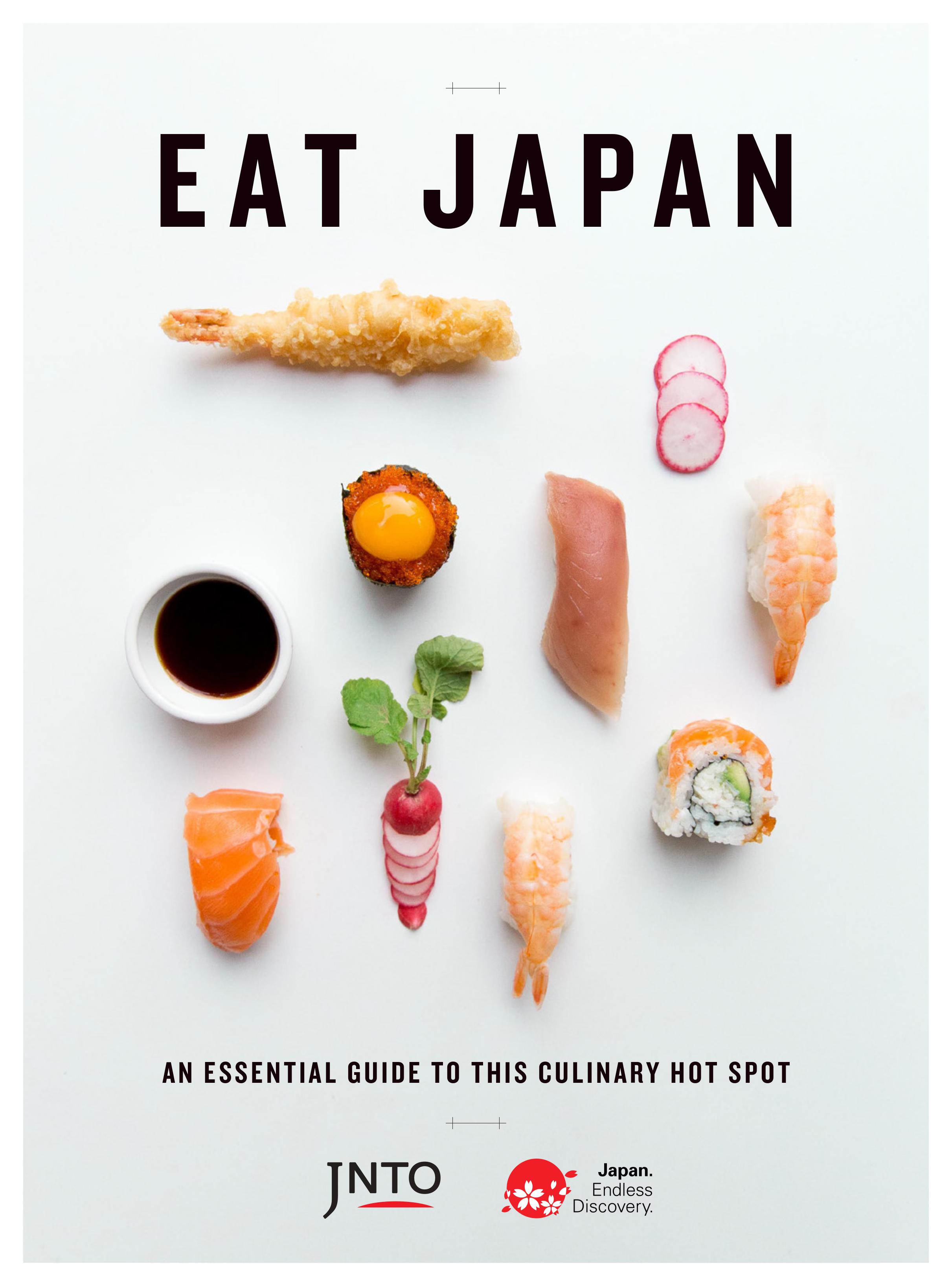
For me, understanding a country’s culture requires you to go beyond the essentialism portrayed by media onto the country. Essentialism is the when a person gives a set identity of attribute to a thing and can/will lead to a biased perspective onto that thing. Japan’s food essentialism is that people always eat rice, have sushi and use chopsticks. It is a stereotype that generalizes the diet of the Japanese. As with other people, I believe that Japan has an alluring beauty in its well-known food, many people come across the world to try many of the things described in the guidebook.

A country’s food culture should never be a static image. It is a constantly evolving art that changes through cascades of small influences from external factors. If all you eat is Japanese food, you subconsciously ‘essentialize’ the food culture and you lose part of what shapes Japan. An example of something not typically attributed to Japan is what a typical Japanese breakfast looks like:
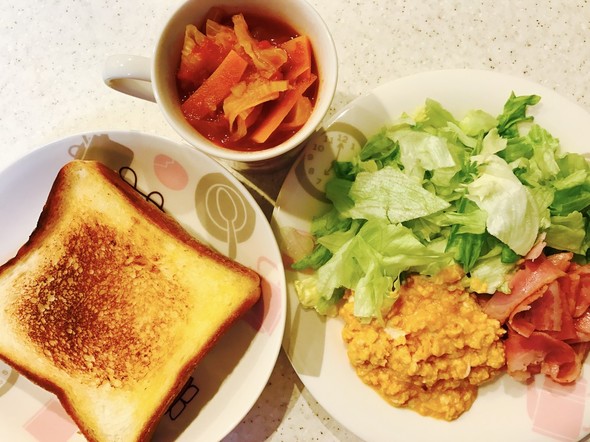
Typical Western-style breakfast in Japan

Japanese diet has become globalized, it is no longer rice with miso soup in the mornings every day. Another example would be Japanese ‘Family Restaurants‘ , which are western-styled restaurants popular with young Japanese. Nevertheless, Most people travel to foreign countries to try local specialties, which is great! However, as a tourist trying to travel smarter you must acknowledge that there is an image portrayed and attempt to see beyond it. Essentialism is a trap to experiencing the unknown.

External sources used:
https://www.tokyocreative.com/articles/19714-eating-on-a-budget-japans-family-restaurants
https://www.jnto.org.au/eat-japan/
https://medium.com/the-mission/the-journey-of-essentialism-and-the-benefits-d7667ee10af9

Japanese Table Etiquette: Boundaries between Japan and the World

Where I am from, eating together with the family just meant having a good meal and some time talking to your loved ones. In Japan, that is different, you will be socially frowned upon or given weird looks if you were to subvert these social standards that I want to discuss today.

Typical Japanese family eating meals together

Before eating a meal, Japanese people always say ‘頂きます’, it is the Japanese phrase not for ‘thank you for the meal’ but ‘to receive’. It is meant as a way to express thanks to the people that worked hard to provide the ingredients and cook the meals. This same gesture is repeated at the end of the meal where they will definitely say ‘ごちそうさまでした’, which means ‘thank you for the feast’. As seen in the photo above, as they say this phrase they clasp their hands together and pray as if they are receiving and offering from the gods, a tradition closely linked to Shintoism. Something that actually surprised me when reading about this topic is that Japanese people tend to have a set order to how they eat their food and eating in a different order would be seen as deviating from the social norm.

Image result for 日本食事マナー

In my opinion, going about minimizing culture confusion would be difficult. Japanese people already typically have weaker English literacy compared to other globalized countries, making it difficult for Japanese to correct foreigners. Without knowledge of this, sharing a table with Japanese will eventually isolate you culturally as you would be shunned, making it an unnecessarily negative experience. To minimize cultural confusion, people need to research about these manners beforehand and let the people they are sharing the table with know about their lack of knowledge.

External sources used:
https://www.kobejones.com.au/a-complete-guide-to-japanese-dining-etiquette/
https://web-japan.org/kidsweb/cook/intro/intro01.html
http://www.iromegane.com/japan/culture/why-japanese-say-itadakimasu-together-before-they-eat/
https://www.japantimes.co.jp/news/2017/04/06/national/japans-latest-english-proficiency-scores-disappoint/

Japanese Beauty Standards: The Impossible Goal

Recently, I have stumbled upon a video on Youtube which has piqued my interest:

‘Asian Boss’ video on Japanese people’s body images

In Japan, the term “Yamato Nadeshiko ( 大和撫子 )” symbolizes the image of the perfect woman. Besides a feminine personality, it means a slim, fair skinned body with beautiful hair that women aim for. Asian Boss brings to light this issue through interviewing people, but a problem doesn’t get fixed until enough people are aware of it.

As mentioned in previous blogposts, Japanese diets have changed to become way more westernized and this has affected the bodies of Japanese people. Most interviewees in the video have stated that their ideal weight would be under 50kg which is unhealthy for many people. However, it is apparent that many Japanese aren’t aware of this issue, which has prompted me to think about how I could contribute to help alleviate this problem of Japanese’s obsession with weight loss and dieting.

I have lived a different life and have had different experiences to a Japanese. Our bone structures are different, we grew up eating different foods and as they said, “the cultures are different”. I believe if universities had more culture exchange programs, this problem could be circumvented. This sort of issue requires international engagement because without that the Japanese society stays as an echo chamber constantly reinforcing the idea of ‘Yamato Nadeshiko’.

Popular Australian language exchange organization

For example, a good approach would be to setup a platform to exchange meal plans between students in Japan and Australian universities. It would obviously be a huge endeavor technologically with setting up a platform, making a network with language barriers. But I believe encouraging this melting-pot of cultures is the most important part to solve this issue and would broaden the horizons of both Japan and the recipient cultures.

External Sources Used:
https://www.japantimes.co.jp/life/2013/09/15/language/nadeshiko-adorable-till-they-die/
https://www.lingopressbooks.com/blog/how-find-language-partner/
https://www.japantimes.co.jp/community/2016/09/21/issues/body-image-foreign-female-japan-survey-shows-frustration-one-size-fits-thinking/

Japan’s Unusual Yellow Pumpkin: Naoshima

When someone thinks of food in Japan, they think of sushi, tempura, hot pot, wagyu beef, the list is endless. When someone thinks of travelling to Japan, they think of Kyoto, Tokyo, Fukuoka, or Osaka. However, none of these locations features the Yellow Pumpkin of Naoshima, which resides on a small island in the inland sea between Honshu and Shikkoku.

Yellow Pumpkin on Naoshima, from Martin Randall Travel

Naoshima is a small town in a secluded island only accessible from nearby ports like Tamano, Takamatsu or Okayama. A similar red pumpkin resides very close to the pier of Naoshima’s port and all visitors are able to see this on the way to the terminal. These unusual landmarks are constructed by Yayoi Kusama who has been creating many of these contemporary art pieces throughout Naoshima which has transformed Naoshima into an attractive location to travel to.

The weird coloration and spotting of the pumpkin represents the inhibited creativity of Japanese people whom are depicted as neat and on-the-beaten-road. It also represents Yayoi’s love for nature and the rural life the he grew up in. The pumpkin implies Japanese’s high vegetable diet, while the location of the pier in which it was placed represents the proximity to the sea and Japan’s connection to it.

Amongst many other contemporary artists, Yayoi has managed to revitalize the once declining Naoshima into an ‘art island’. He has also encouraged others to do the same which has created a communal atmosphere in the area. Community is an important aspect in any country’s identity and Japan is no different, which can be seen both here and on the food table. For me, this is the most fascinating thing about Naoshima’s revitalization, it has not only attracted tourists but has created a network for the locals to connect with one another.

The backstreets of Naoshima, depicting the different kinds of artwork from local artists. Picture from DifferentVille

Sushi as a Reflection of Japanese Society?

Alexandre Tremblot de La Croix/Getty Images

We have all probably eaten or seen the symbolic dish known as “sushi”. It tastes, looks and feels Japanese. But I have chosen it not for any of those reasons, I believe it embodies the image of Japanese values and culture.

On the surface, the sushi became well known due to globalization and the taste that fits the palates of most people. Almost all countries have what is commonly known as sushi trains and it became one of the first things people think of when Japan comes to mind. But I believe that there is a hidden side to sushi beyond what we experience on the dining table.

Nigiri sushi (握り寿司) consists of a layer of rice at the bottom with a raw piece of fish on top. The common use of seafood as the main protein in the dish represents the geography of Japan being a coastal country while the rice represents the main carbohydrates (主食) in Japanese diet. It wouldn’t be far-fetched to argue that the sushi is a representation of a Japanese person’s diet.

However, why bother structuring the components into a sushi instead of rice with fish on top (known as the sashimi don)? For rice to hold itself in a sushi, rice must be sufficiently moist and sticky. From adjusting the water and vinegar ratio for the rice to the chef’s ability to manipulate the shape; this neat composition is only achievable through meticulous craftsmanship in the kitchen where sushi chefs are trained for at times decades before they become masters.

Advancements in many fields such as robotics and infrastructure in Japan, we can see the significance of perfectionism in every facet of life for them that allows them to strive. The visual aesthetics in food is an art deriving from this desire which has become a symbol of Japan reproduced throughout the world in many restaurants.

About Me: Why Japan and Food?

“Traveling is an easy way of surrounding ourselves, as in childhood, with what we cannot understand “

Iyer, Pico (2000). ‘Why We Travel’

Travelling has always been a way for me to escape the monotonousness of daily routines; to find something that isn’t just the ‘same’. It is analogous to the feeling that I got as a child when you try food for the first time and don’t know what to expect. For me, travelling means to go on a journey that doesn’t begin until there is no way back. I believe that having no way back is the way to bring yourself into the unknown, to push yourself out of your comfort zone to internalize the experience of being somewhere you have never been.

Pico’s shares similar sentiments to myself, but I also feel that by travelling, you begin to appreciate things that you missed in your home country, that maybe you don’t truly understand your home. It allows me to rediscover places that I have already been and gain a greater understanding of ‘humanity’.

Japan has always been a place I wanted to go. To me, it is one of the most unique countries in the world as despite being a highly developed country, it has a completely different culture to what we have in Australia. This fascination has given me the privilege to meet Japanese people and read about Japan . One thing they always talk about is how the food is very different in Japan and the implications that it has on their way of life. I have realized that Japanese food has crucial connections to how Japanese live their lives and represents their culture in a subtle manner. In this blog I would like to delve deeper into this facet of Japan, the connection of gorgeous food to serene Japanese culture.

Design a site like this with WordPress.com
Get started